



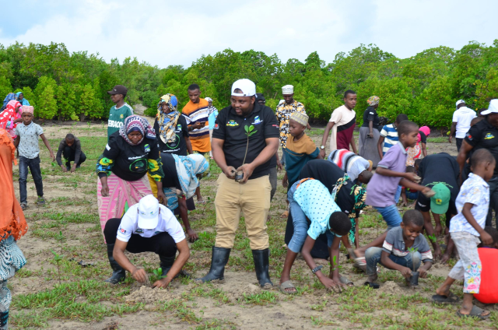
Climate change in Zanzibar is increasingly evident, with approximately 148 areas in Unguja and Pemba at risk of severe inundation. Mangrove ecosystems are among Zanzibar’s most important natural defenses against the growing impacts of climate change. They protect coastlines from erosion, reduce the impacts of storms and tidal surges, provide breeding grounds for fish and other marine species, and support livelihoods that coastal communities depend on. As climate-related risks continue to threaten vulnerable island communities, community-led mangrove restoration is emerging as a practical and sustainable solution that strengthens both environmental health and local resilience.
Recognizing this critical role, more than 50 community members from Tumbatu Island joined government leaders, environmental institutions, and development partners on 30 May 2026 to inaugurate a community-led mangrove restoration initiative aimed at restoring degraded coastal ecosystems and safeguarding livelihoods. The activity was inaugurated by the Principal Secretary of the First Vice President’s Office (FVPO), who was represented by Mr. Ilyasa Haji – The Director of Policy and Planning FVPO. The event brought together shehia leaders, leaders from the Tumbatu Marine Conservation Area (TUMCA), members of the Shehia Fisheries Committees (SFCs), technical experts, and government representatives from FVPO - Department of Environment and Zanzibar Environmental Management Authority (ZEMA), the Tumbatu Sub-District Office, the District Administrative Secretary’s Office, partner organizations, and technical experts in a shared effort to promote sustainable management of coastal resources and build towards the Green Legacy Program in Zanzibar.
The event demonstrated the growing commitment of Tumbatu residents to environmental stewardship and collective action. Through active participation in the restoration exercise, community members reaffirmed their role as custodians of the island’s natural resources and highlighted the importance of local ownership in achieving long-term conservation outcomes.
Speaking on behalf of the Tumbatu community group, a member highlighted the remarkable progress achieved through the training and support provided by CAN Tanzania, noting that the mangrove restoration initiative has been ongoing since the establishment of the community mangrove nursery in July 2025. The nursery has successfully produced nearly 55,000 mangrove seedlings across four indigenous species, surpassing its initial target of planting 50,000 seedlings by June 2026. Already, more than 6,000 seedlings have been planted in degraded areas of Uvinje in Mtakuja shehia, helping restore critical coastal ecosystems. The community member noted that the achievement demonstrates the group’s growing technical capacity and commitment to environmental conservation, while also revealing ambitions to expand into other sustainable livelihood initiatives, including commercial beekeeping, sea turtle conservation, and seaweed farming to strengthen both environmental protection and community resilience.
The Guest of Honor expressed appreciation for CAN Tanzania’s alignment with the Green Legacy Program. The Guest emphasized the importance of sustainable practices in addressing climate change and promoting environmental well-being. He highlighted that the innovative policies and community interventions are instrumental in enriching our natural landscapes and empowering local populations to actively engage in environmental protection.
The successful launch of the mangrove restoration initiative demonstrates the power of collaboration among communities, government agencies, and partners to tackle climate and environmental issues. CAN Tanzania is committed to supporting mangrove restoration, beekeeping initiatives, seaweed farming, and sea turtle nesting monitoring and conservation in Tumbatu Island to enhance the Island’s resilience to climate impacts, conserve biodiversity, support sustainable fisheries, and secure livelihoods for future generations.